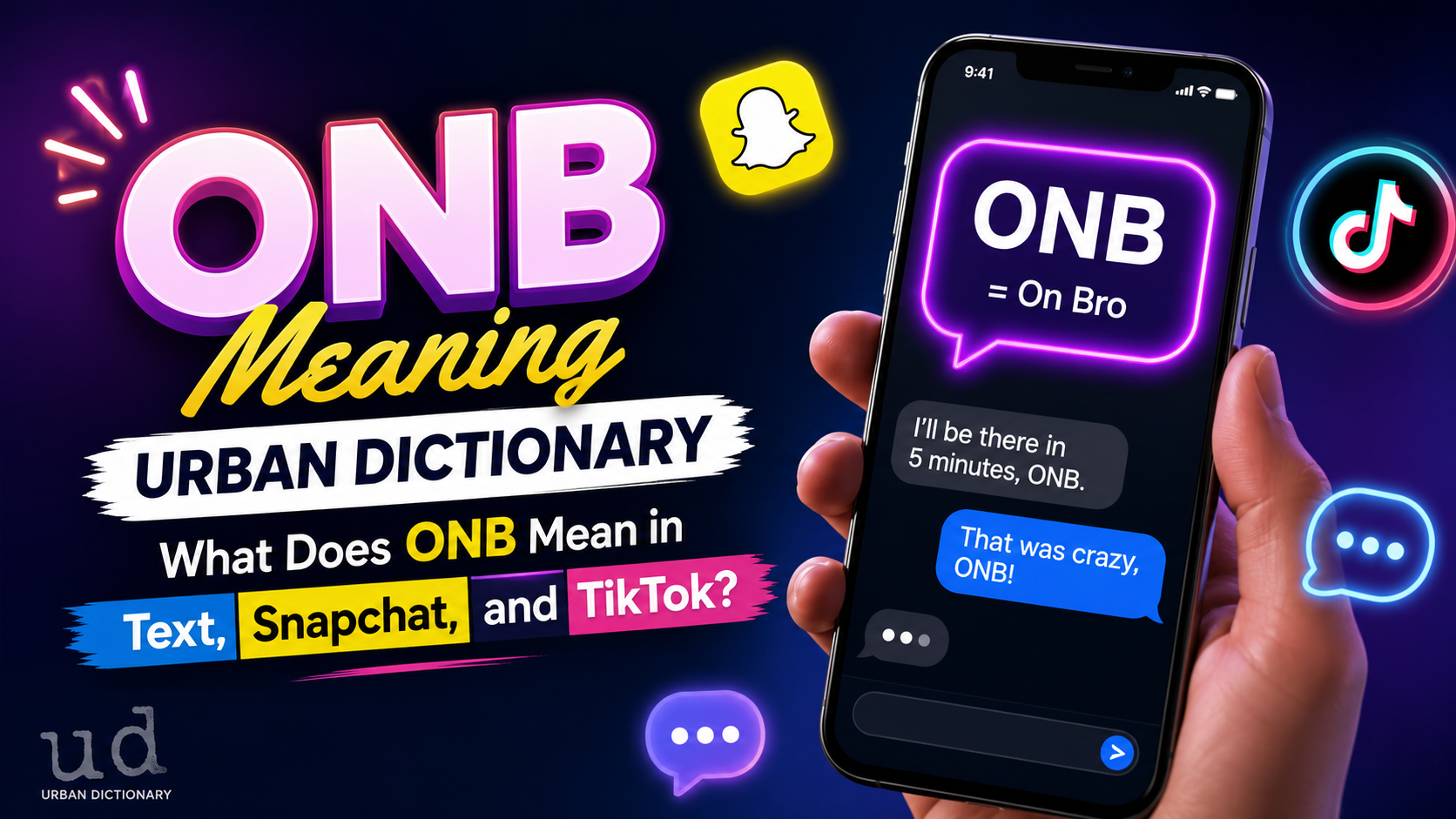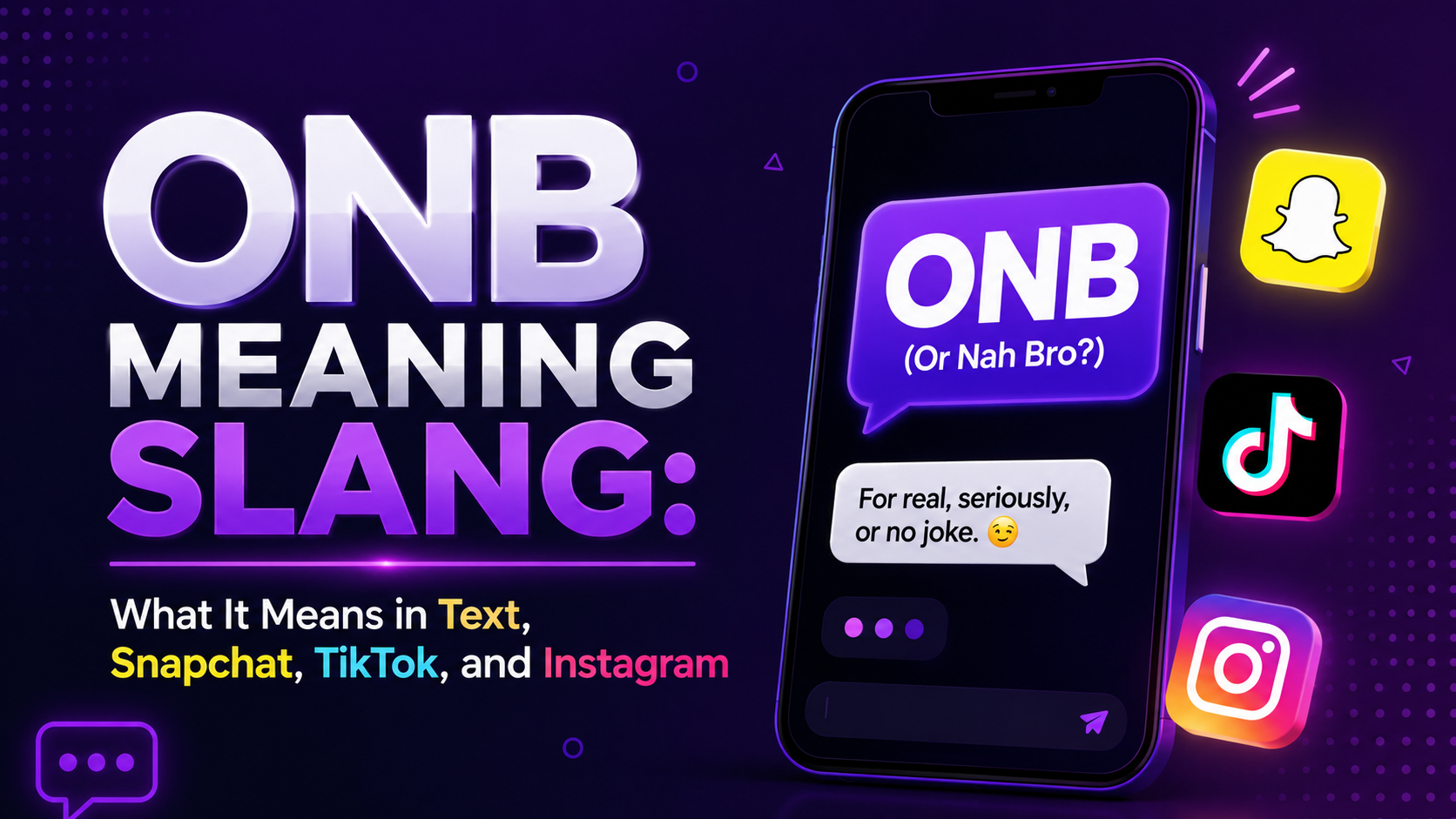
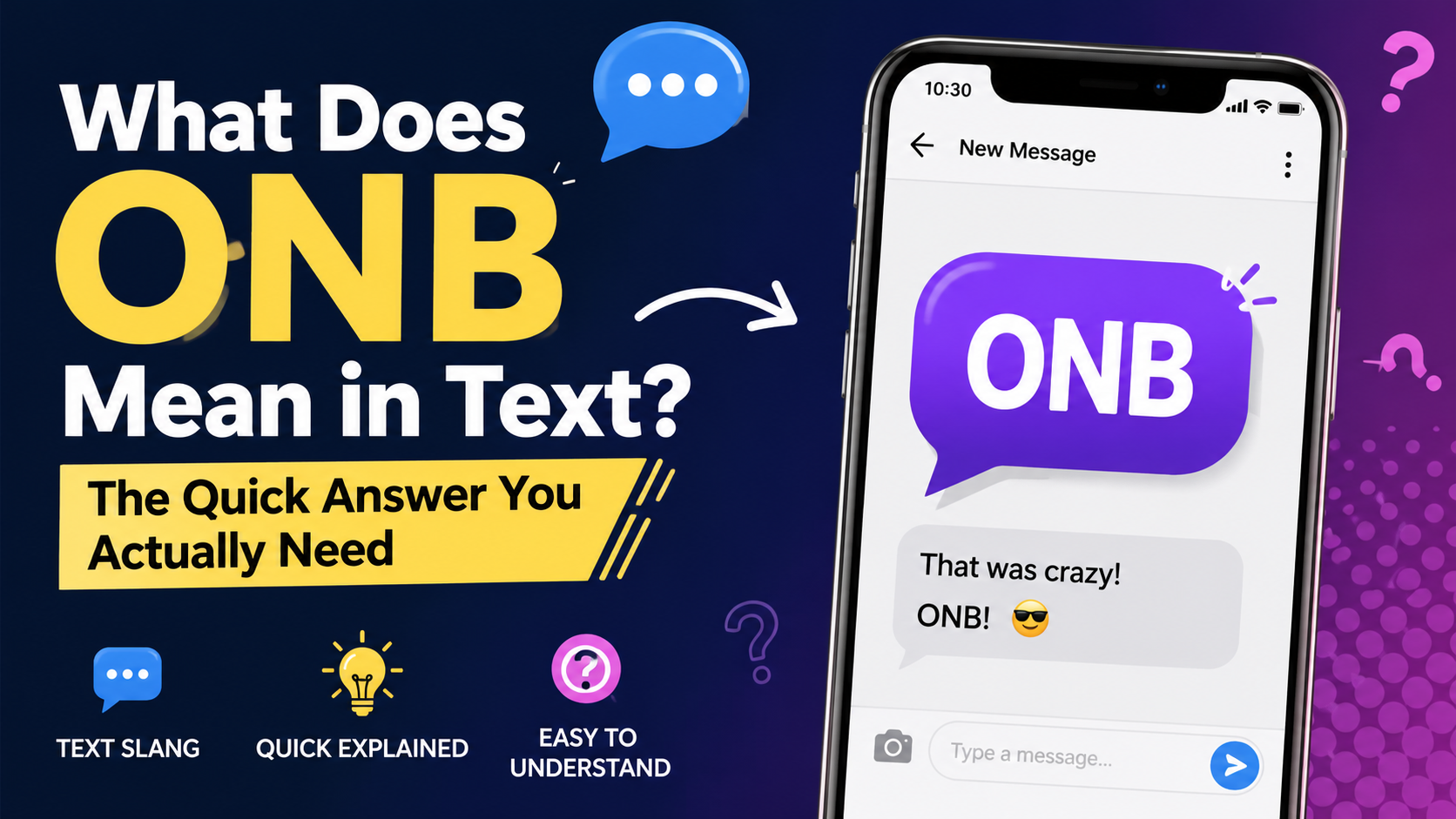
Alright, let’s get straight to it. ONB in texts means “Or Nah Bro?” People usually throw it at the end of a question when they just want a quick yes or no. No drama, no long chat. Think of it as a casual way to get confirmation. Someone pings you, and you just reply. That’s it. You’ve probably seen it on Snapchat, TikTok, or in Instagram DMs. Like a friend might say: “Movie night at my place, ONB?”
They’re basically asking, “You in or not?” And yeah, if you paused for a sec reading that, you’re not alone. This little slang word confuses a lot of people. So let’s break it down for good.
Where ONB Actually Started (and Why It Took Off)
No company or dictionary created ONB. It’s just internet slang that started in group chats and TikTok comments around the mid-2010s. You can find early versions on Twitter and Vine, where people typed “or nah bro?” Back then, phone keyboards were a pain, so people shortened it to 3 letters. Why type the whole thing when you don’t need to? It really blew up on TikTok around 2019. Then by 2021, it was everywhere on Snapchat and Instagram DMs. Nowadays you’ll mostly see it in casual texts between friends. You won’t find it in emails or work messages.
That’s probably why older people have no clue what it means — they’re just not in those spaces where ONB is used. To be honest, I first saw ONB in a TikTok comment, and I was so confused lol. I asked my cousin what it meant, and she said “It just means or nah bro”. Now I use it all the time with my friends when I want a quick reply.
When and How to Use ONB the Right Way
ONB rides at the end of a message like a tiny capstone. It simply asks, “Are you in or out?” without making you type the entire phrase.
You can drop it into almost any setup that ends with a yes-or-no decision:
- “Eddie’s party is live — you coming, ONB?”
- “Pizza and Xbox at mine, ONB?”
- “Posting this photo ONB?”
Notice how the acronym keeps a question mark in spirit but skips it in form. That’s the whole vibe: punchy, peer-coded, and built for fast scrolling. It works best among friends in low-stakes chat moments, and it stays lightweight enough that nobody reads into it.

When You Should Definitely Skip ONB
Here’s the honest part most guides miss. ONB isn’t built for every scene, even though typing it takes half a second. Drop the abbreviation when you’re messaging a boss, a teacher, an older relative, a client, or a formal group. In those spots, swap it for the full “or nah?” or ask cleanly. ONB earns its casual energy only when both sides speak the slang — if they don’t, the acronym reads like a confusing gatekeeper, and you’ll come off as trying too hard.
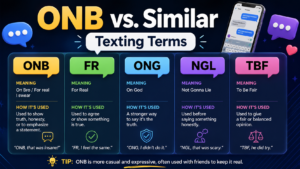
ONB vs. Similar Texting Terms
|
Slang |
Meaning |
Typical Vibe |
|
ONB |
Or Nah Bro? | Peer check-in |
|
IDK |
I Don’t Know |
Soft uncertainty |
|
WYA |
Where are you? |
Location check |
|
FR |
For Real |
Emphasis |
| HMU | Hit Me Up |
Open invitation |
You’ll notice every entry in that table shares one trait: speed. Modern messaging rewards whoever can convey an idea with the fewest taps. I’ll be real with you — I first saw ONB in my friend’s Snapchat story. I thought it was some new app name, and I even googled it. I eventually learned it means “or nah bro,” and now I use it whenever I need a quick yes-or-no answer.
The Stuff Other Explainers Skip (Information Gain)
Most ONB meaning in text guides stop at “it means or nah bro.” That answer’s fine, but it’s not the whole story.
ONB carries a faintly male-leaning undertone because of the “bro” baked inside. Plenty of women and nonbinary folks type it, though, and you’ll see soft variants like “onb?” lowercase, or stripped-down “or nah?” without the brotherly tail. The acronym bends to whoever’s using it, which is part of why it keeps spreading across social media.
Geographically, ONB barely changes. It reads the same in California, London, Manila, and Johannesburg — pretty unusual for slang, which usually picks up local flavor fast. The cleanness of the abbreviation is a big reason it survives translation across regions.
A small usage warning from lived experience: ONB sometimes gets weaponized in a passive-aggressive way. “You going ONB?” at the end of a long planning chat can read as pressure or guilt. Read the room and the recipient’s tone before firing it off. Slang is fun until it isn’t.
Bottom Line: What to Remember About ONB
ONB, at its core, is a tiny acronym asking for a quick commitment. It lives in casual text and DM spaces. It came up through short-form video culture and works best when both people know the lingo. Skip it in work emails and it with strangers. Skip it when the mood already feels tense. If not, the next time you come across ONB in a text, reply without overthinking it—your friend is simply looking for a quick yes-or-no answer.
Now go send that ONB reply. They’ll appreciate you not leaving them on read.
For more information Click here.