
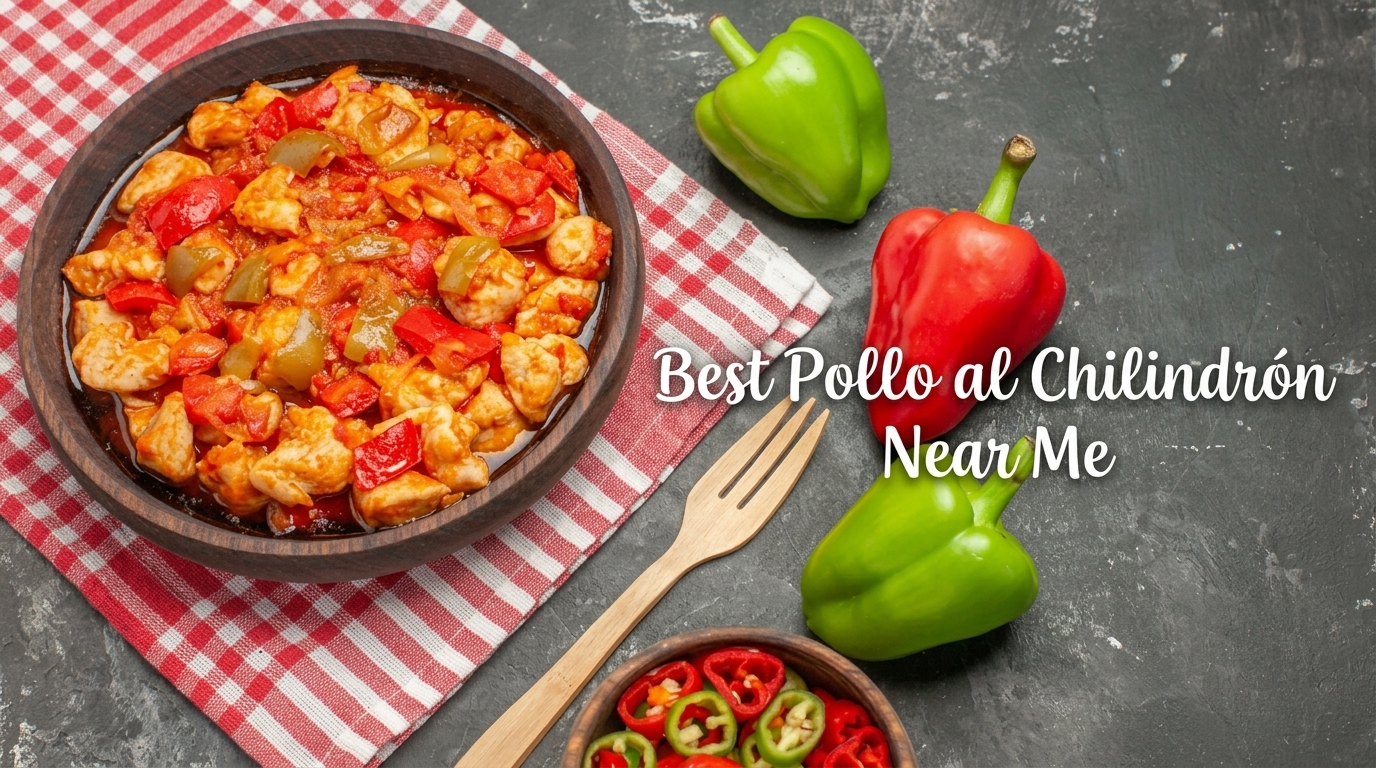
Pollo al chilindron is a slow-cooked chicken stew from Aragón, Spain, made with red bell peppers, tomato, onion, garlic, olive oil, and often Serrano ham. No Sacramento-area Spanish restaurant currently lists it on its public menu, so the reliable way to find it is to call the region’s most traditional Spanish kitchens — Telefèric Barcelona Roseville, Tapa the World, and Aioli Bodega Espanola — and ask about chilindron or Aragonese specials.
Quick Reference: Pollo al Chilindrón Finder at a Glance
|
Item |
Details |
|
The dish |
Slow-cooked chicken stew from Aragón: red peppers, tomato, onion, garlic, olive oil, often Serrano ham |
| Where to try |
Traditional Spanish kitchens — often a special, not a permanent menu item |
|
Roseville pick |
Telefèric Barcelona Roseville — 1190 Roseville Pkwy · 4.5★ · (657) 655-3596 |
| Sacramento picks |
Tapa the World — 2115 J St · (916) 442-4353 · closed Mon · Aioli Bodega Espanola — 1800 L St · (916) 447-9440 |
|
How to confirm |
Call in advance and ask, “Do you have chilindron or Aragonese specials available?” |
| What to pair |
Crusty bread + a Rioja or Tempranillo |
|
Authenticity check |
Visible peppers, smoky pimentón, ham undertone, fall-off-the-bone chicken |
| If unavailable |
Cook it at home — 45–60 min simmer, standard grocery ingredients |
What Is Pollo al Chilindron? (And Why Food Lovers Seek It Out)
Pollo al chilindron is a rustic chicken stew from Aragón, a region in northern Spain known for hearty, pepper-forward cooking. The name comes from the chilindrón style — a slow braise of sweet red bell peppers, grated tomato, onion, and garlic softened in olive oil, deepened with pimentón (Spanish smoked paprika) and, traditionally, a small amount of Serrano ham for a salty, savory base.
Bone-in chicken simmers in that sauce for an hour or more until the meat barely holds to the bone. The finished dish is thick, glossy, and spoonable — closer to a rich braise than a soupy stew — and in Aragón it’s served with crusty bread or fried potatoes to catch every bit of the sauce.
That combination explains its cult appeal: it’s Spanish comfort food at its most honest, the kind of dish that rarely leaves home kitchens in Spain but rewards anyone who tracks it down at a table abroad. It also explains why it’s hard to find — more on that next.
Chilindron vs. Other Spanish Chicken Dishes (Don’t Get Fooled)
Here’s a problem most searchers run into: plenty of restaurants serve a generic Spanish chicken stew and call it chilindron. The dishes look similar on a menu but taste different at the table. This comparison separates them:
|
Dish |
Sauce base | Peppers | Ham | Region |
How to tell them apart |
|
Pollo al chilindron |
Tomato + sweet red peppers, olive oil | The star — visible strips of soft red pepper | Often (Serrano) | Aragón | Red pepper dominates both the color and the flavor |
| Pollo guisado | Tomato + onion, generic “stew” | Optional, minor | Rare | Varies across Spain |
A catch-all chicken stew; no pepper-forward profile |
|
Arroz con pollo |
Rice cooked in tomato-saffron broth | Small pieces | Rare | Valencia & beyond |
It’s a rice dish — the chicken shares the plate with grains |
|
Fricandó |
Rich brown sauce, mushrooms | No red peppers | Rare | Catalonia |
Dark, mushroomy, wine-based — a completely different color |
The practical test when scanning a menu: if the dish description mentions peppers first and tomato second, there’s a real chance it’s chilindron or something close to it. If tomato and onion lead and peppers are absent, it’s guisado wearing a nicer name.
Where to Find Pollo al Chilindron Near You (Roseville–Sacramento Guide)
An honest reality check first: chilindron is a regional specialty, and like most regional Spanish stews it rarely holds a permanent slot on American menus. A check of the strongest Spanish kitchens in the Roseville–Sacramento area confirms it — none currently lists pollo al chilindron on its published menu. That doesn’t mean the search is hopeless; it means the search changes shape. Regional dishes surface as rotating chef’s specials, seasonal winter items, or off-menu requests at kitchens that cook traditional Spanish food the rest of the year.
Here are the three kitchens most likely to make chilindron well or honor the request:
|
Restaurant |
Address | Phone | Rating | Hours |
Why it’s a strong bet |
|
Telefèric Barcelona Roseville |
1190 Roseville Pkwy, Roseville, CA 95678 | (657) 655-3596 | 4.5★ | Lunch & dinner daily |
The most serious Spanish kitchen in Roseville — Catalan-style tapas, paella cooked to order, 200+ Spanish wines, tapas from about $8 |
|
Tapa the World |
2115 J St, Sacramento, CA 95816 | (916) 442-4353 | 4.4★ | Tue–Sun from 11:30 AM · closed Mondays | A midtown institution with rotating chef’s specials — the natural entry point for a regional stew request |
| Aioli Bodega Española | 1800 L St, Sacramento, CA 95811 | (916) 447-9440 | 4.3★ | Monday–Saturday: 11 AM–10 PM · Sunday: 3 PM–9 PM |
Self-described traditional Spanish cooking with a classic menu and a strong Spanish wine program |
These three were selected on the same criteria you’d use in any city: genuine Spanish (not Latin-fusion) kitchens, strong ratings from diners, menus built on traditional regional cooking, and chefs who already handle slow-cooked and braised dishes. Two more casual options — The Lock & Key, a tapas bar on J Street, and Alaro Craft Brewery, which pours a solid tapas selection alongside its beers — are worth a call if the first three strike out.
Best Bets in Roseville and Nearby
If you’re in Roseville proper, Telefèric Barcelona is the clear first call. The kitchen’s focus is Catalan, and chilindron is an Aragonese dish from the neighboring region — close enough in technique and ingredient spirit that a kitchen this Spanish-literate can execute it, especially if a chef decides to run it as a special. Ask when you call about regional specials or whether the kitchen would take an advance request for a group.
Sacramento Spanish Kitchens Worth the Drive
Tapa the World and Aioli Bodega Espanola are the two most traditional Spanish kitchens in Sacramento, and both run the kind of operation where specials change with the seasons. Use this script when you call:
“Do you ever run chilindron or other Aragonese specials? If I called ahead a week, could you make it for a party?”
That second sentence matters. Restaurants respond differently to a request framed as a future commitment than to a one-off question — a party of four promising to return on a set date is often all a chef needs to put a regional dish on the board.
How to Order: Check Availability, Hours & Call in Advance
Regional Spanish stews follow a predictable seasonal rhythm. They appear most often on fall and winter menus, when braised dishes sell, and they surface as rotating chef’s specials — exactly the format Tapa the World runs daily — rather than printed permanent items. That’s why calling beats reading menus online: specials and off-menu dishes rarely make it to a website.
Follow this sequence before you get in the car:
- Check the menu online for anything pepper-forward — chilindrón, chicken chilindrón, or “braised chicken with red peppers.”
- Call the restaurant and use the script above; ask specifically about Aragonese or regional Spanish specials.
- Ask about off-menu possibilities — traditional kitchens can often prepare a classic dish with advance notice.
- Book ahead for groups, since stews are frequently family-style portions serving two to four.
One more timing note: weekend evenings are when restaurants run their fullest special menus, so a Friday or Saturday call has the best odds of catching a regional dish already on the board.
How to Tell If the Chilindron Is Authentic (5-Point Checklist)
When the dish lands at your table, this rubric separates the real Aragonese article from a dressed-up chicken stew:
|
# |
What to check | Authentic version |
Warning sign |
|
1 |
The peppers | Visible, soft strips of sweet red pepper in the sauce |
A smooth purée or no pepper texture at all |
|
2 |
The paprika | Deep, smoky pimentón warmth in the finish | Flat sweetness from generic paprika |
| 3 | The ham | A subtle salty, savory undertone (Serrano or its fat) |
No depth at all — just tomato and chicken |
|
4 |
The chicken | Bone-in, slow-cooked, falling from the bone | Boneless breast chunks cooked quickly |
| 5 | The presentation | Served with crusty bread or fried potatoes for the sauce |
No vehicle for the sauce — a small authenticity tell |
No single point disqualifies a dish, and a good kitchen might serve skinless, boneless versions for service efficiency. But three or more misses usually mean you’re eating pollo guisado with a Spanish name.
What Goes Well With It: Recommended Pairings & Side Dishes
Bread, always. In Aragón, chilindron is served with crusty bread as standard equipment, because the sauce is the point. If bread doesn’t come automatically, order it.
Wine: the dish’s profile — sweet peppers, smoked paprika, tomato acidity, rich chicken — calls for a medium-bodied Spanish red. A Rioja or Tempranillo is the classic match, and all three restaurants on the shortlist pour them: Telefèric keeps a list of more than 200 Spanish wines, and both Sacramento kitchens run serious Spanish wine programs.
Tapas that don’t clash: the braise is rich, so keep starters simple — gambas al ajillo (garlic shrimp), tortilla española, or a simple green salad. Skip heavily sauced or fried tapas before a stew.
Budget framing: tapas at these kitchens generally run about $8–$22 per plate, and a chilindron-style special, when offered, typically prices alongside the kitchen’s other braised entrees. A tapas-plus-stew dinner for two with a glass of wine each lands in the standard upscale-casual range for the area — expect to spend more at Telefèric than at the Sacramento kitchens, but not dramatically so.
Common Mistakes When Hunting for Chilindron Nearby
Trusting the “Spanish restaurant” label. A quick local search turns up plenty of listings mixing Spanish, Mexican, and fusion concepts. Verify the kitchen actually cooks Spanish cuisine — a menu with paella and jamón is a good signal; a menu of burritos and margaritas with one paella is not.
Showing up without calling. This is the mistake that wastes the most trips. Regional stews live on specials boards and in chefs’ heads, not on websites. A two-minute phone call settles it.
Expecting a soup. Chilindron is a thick braise, not a brothy stew. Diners who expect soup often misread an authentic version as “too dry” — the sauce should coat the chicken, not swim around it.
Settling and mislabeling. Ordering generic chicken in tomato sauce and calling it chilindron muddies the memory. If the dish doesn’t match the checklist, ask the server what the kitchen calls it — you’ll learn more about the menu and eat better next visit.
Can’t Find It Nearby? Make Authentic Chilindron at Home
If the calls come up empty this week, chilindron is one of the most approachable regional Spanish dishes to cook. Every ingredient sits in a standard American supermarket:
|
Ingredient |
What to buy |
Easy swap if needed |
|
Chicken |
Bone-in thighs and drumsticks (about 3–3.5 lbs) | Bone-in breasts, though thighs stay juicier |
| Red peppers | 3–4 large sweet red bell peppers, sliced |
Roasted jarred peppers stirred in near the end |
|
Tomato |
3–4 ripe tomatoes, grated, or one can crushed tomato | Quality marinara in a pinch |
| Pimentón | Spanish smoked paprika (pimentón de la Vera) |
Regular paprika — but you lose the signature smoke |
|
Ham |
A few slices of Serrano ham, chopped | Prosciutto, or skip it for a lighter stew |
| Aromatics | Onion, garlic, olive oil, bay leaf |
Non-negotiable — the base of the whole dish |
The method in brief: sear the seasoned chicken in olive oil and set it aside, soften the onion, garlic, and peppers in the same pot, add the tomato and pimentón and cook down for ten minutes, then return the chicken, add a splash of water or broth, and simmer gently for 45–60 minutes until the sauce thickens and the meat gives up without a fight. Serve with crusty bread and nothing else — that’s how they do it in Aragón. Full, detailed recipes are easy to find under “pollo al chilindron recipe” from established Spanish cooking sites.
Practical Takeaways
- Shortlist the three verified kitchens — Telefèric Barcelona Roseville, Tapa the World, and Aioli Bodega Espanola — and call before visiting anyone.
- Use the script: ask about chilindron or Aragonese specials, and offer an advance booking to unlock off-menu requests.
- Apply the 5-point checklist when the dish arrives: visible peppers, smoky pimentón, ham undertone, fall-off-the-bone chicken, bread on the side.
- Pair with a Rioja or Tempranillo and keep starter tapas simple.
- Keep the home recipe as your backup — the ingredients are all supermarket-standard, and the simmer does the work.
Frequently Asked Questions
What is pollo al chilindron, in simple terms?
It’s a traditional chicken stew from Aragón, Spain. Chicken simmers slowly in a sauce of sweet red peppers, tomato, onion, garlic, olive oil, and smoked paprika, often with a touch of Serrano ham. The result is tender, fall-apart chicken in a thick, red, deeply savory sauce.
Is pollo al chilindron spicy?
No. Despite the fiery-sounding name, chilindron is not a hot dish. It’s built on sweet red bell peppers and smoked paprika, which bring warmth and depth, not heat. If you want spice, some cooks add a pinch of hot pimentón, but the traditional Aragonese version is mild and family-friendly.
Which restaurants near me serve pollo al chilindron?
In the Roseville–Sacramento area, no restaurant currently lists it on its published menu, but the strongest bets are Telefèric Barcelona Roseville (1190 Roseville Pkwy, 4.5★), Tapa the World (2115 J St, Sacramento), and Aioli Bodega Espanola (1800 L St, Sacramento). Call ahead and ask about chilindron or regional Spanish specials — traditional kitchens often take advance requests.
What’s the difference between chilindron and regular Spanish chicken stew?
Regular Spanish chicken stew (pollo guisado) is a tomato-onion braise where peppers play a minor role. Chilindron is pepper-forward: sweet red peppers are the defining ingredient, backed by smoked paprika and, traditionally, Serrano ham. If the sauce tastes primarily of tomato and onion, it’s guisado, not chilindron.
What wine pairs best with pollo al chilindron?
A medium-bodied Spanish red is the classic match — Rioja or Tempranillo first, with Garnacha as a lively alternative. The wine’s fruit and moderate tannins stand up to the smoked paprika and tomato without overpowering the sweet peppers. All three recommended local restaurants pour Spanish reds by the glass.
Can I make pollo al chilindron at home without special ingredients?
Yes. Bone-in chicken thighs, red bell peppers, canned crushed tomato, onion, garlic, olive oil, and paprika cover 90% of the dish. Serrano ham adds authenticity, but prosciutto works as a substitute. The only ingredient worth hunting for is Spanish smoked paprika (pimentón de la Vera) — it defines the flavor, and most supermarkets stock it.
Final Word
Chilindron rewards the phone call that most diners never make: ask a traditional Spanish kitchen about Aragonese specials, and you’ll either land one of Spain’s great comfort dishes or learn exactly when you can. And if every call comes up empty this week, a pot of it is about an hour away in your own kitchen.
Click here for more details.